
I wonder why customer experience seems to be on a downward spiral despite all the digital glitz and...
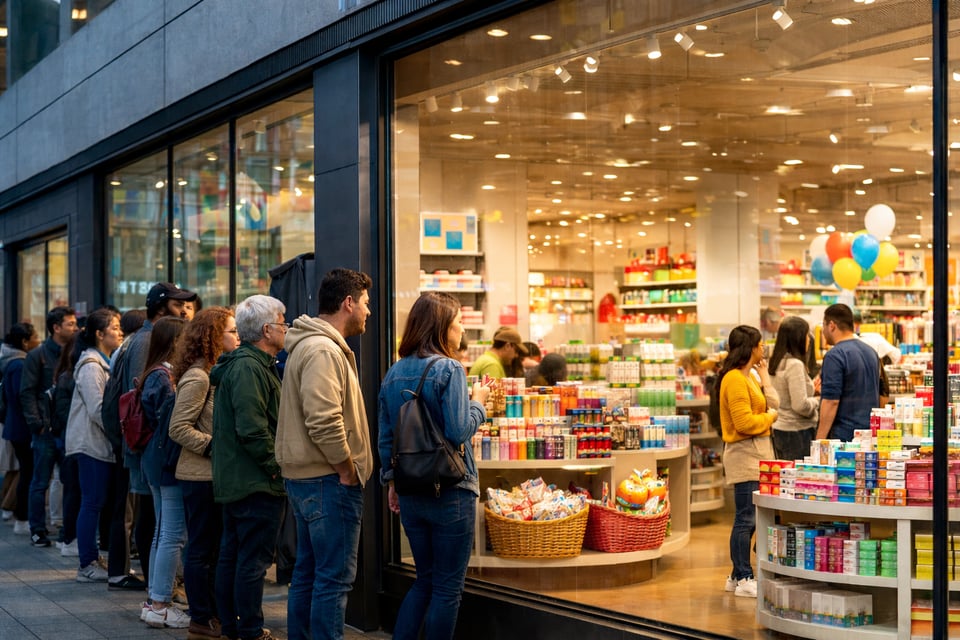
On a cold morning in Dublin recently, something unusual happened on Henry Street. A queue formed outside a shop that had not even opened yet. Passers-by stopped to look through the windows. Some people waited patiently. Others checked their phones, curious about what all the fuss was about.
When the doors finally opened, the crowd flowed inside. What were they queuing for? Shampoo, cleaning products and chocolate bars. Hardly the sort of things that normally cause excitement.
But this was the opening of Danish retailer Normal, and the scene tells us something important about modern retail. Customers do not queue for products; they queue for experiences.
Because every one of those products was already available somewhere else. Many were cheaper online. Some were stocked in stores only a few minutes away. And yet customers queued.
Retail leaders should pause and reflect on that for a moment. Because the lesson is simple. In a world where products are everywhere, experience is the only real differentiator.
The New Reality of Retail
For most of the twentieth century retail worked on a simple formula; Stock the right products, keep prices competitive and make sure the shelves are full.
That was usually enough, but the internet quietly changed the rules. Today customers can buy almost anything delivered the next day, price compared instantly and reviewed by thousands of other buyers
The product advantage has largely disappeared, which means physical retail now competes on something different. Not distribution, not convenience, but experience. Customers will still visit stores, but only if there is a reason to do so.
The Curiosity Economy
Normal’s success is not accidental. The retailer has deliberately designed its stores around what behavioural economists call curiosity triggers. Instead of traditional aisles, customers follow a winding route through the shop. As they move along, they encounter unexpected products, quirky packaging and new items that appear regularly.
Around one hundred new products arrive each week and the effect is powerful. Customers feel they might miss something if they rush. So, they slow down, they browse and they discover. And discovery is one of the most powerful drivers of retail spending.
Think about the last time you went into a store intending to buy just one thing and left with three. That rarely happens in a purely functional environment, it happens when the shopping experience sparks curiosity.
Retail Is Theatre
The most successful retailers have always understood this instinctively. A great store is not simply a place where transactions occur, it is a stage. The lighting, layout, product displays and colleague interactions all combine to create a sense of atmosphere.
Consider the approach taken by Brown Thomas in Dublin. The store has invested heavily in experiential retail. Personal shopping services, luxury events and an exclusive members’ club create a sense of belonging for its most loyal customers. People do not visit Brown Thomas only to buy a handbag, they visit because the environment feels special.
The same principle applies at a very different price point. Dunnes Stores has spent the past decade quietly transforming it’s store experience. With improved environments, upgraded food ranges and partnerships with well-known chefs they have elevated the brand. The result is a retailer that now leads the Irish grocery market.
Brown Thomas and Dunnes have different formats and different price points but the same principle; Retail success comes from designing experiences that customers enjoy.
The Experience Gap
Despite this evidence, many retailers still operate stores that feel remarkably transactional. You see the symptoms everywhere. Stores where:
- the layout feels functional rather than engaging
- colleagues avoid eye contact
- nothing new or surprising appears on the shelves
- the environment feels identical to every competitor
When stores feel like this, something predictable happens. Customers start asking a simple question. “If the experience is the same everywhere, why not just buy the cheapest option?” That is how price wars begin and price wars are rarely where retailers want to compete.
Experience Drives Behaviour
Retailers often focus heavily on metrics such as footfall, conversion rates and average transaction value. But those numbers are simply the result of something deeper; Customer behaviour. And customer behaviour is shaped by experience.
If a store environment sparks curiosity, customers explore. If colleagues engage naturally, customers ask questions. If the experience feels enjoyable, customers stay longer. Each of those behaviours increases the likelihood of purchase.
This is why the most successful retailers design experiences deliberately rather than leaving them to chance.
The Three Experiences That Matter Most
Retail leaders who want to strengthen their stores should focus on three distinct layers of experience.
1. The Discovery Experience
What encourages customers to explore your store? Newness, surprise and visual theatre all play an important role. Normal’s treasure-hunt layout is a clear example. Without discovery, stores quickly become predictable and predictable stores rarely excite customers.
2. The Human Experience
How do customers feel when they interact with your team? This is where many retailers underestimate their greatest advantage. A helpful colleague can achieve something that technology never will, they can create a genuine moment of connection. Customers remember those moments far longer than they remember prices.
3. The Emotional Experience
What story do customers tell when they leave your store? Was the visit enjoyable? Was it inspiring? Or was it simply efficient?
Retailers who succeed are those who deliberately design moments that customers remember.
The Leadership Question
For retail leaders, the most important question is not about pricing strategy or store formats. It is much simpler; What does it actually feel like to shop in your stores today? Not the experience described in strategy documents, but the real one. The one that customers encounter every day. Because customers are remarkably honest in how they respond. They return to stores that make them feel good and they quietly abandon those that do not.
The Future of Physical Retail
Physical retail is far from dead, but its purpose has evolved. Stores are no longer simply distribution points; they are places where brands come to life. Retailers who recognise this shift are designing environments that feel engaging, welcoming and memorable and those who do not risk becoming a showroom for products that customers ultimately buy somewhere else.
Practical Actions for Retail Leaders
If you want to strengthen the experience in your stores, start with five practical steps.
1. Walk your stores as a customer
Observe how the environment feels from the moment someone enters the door.
2. Identify your hallmark moments
Where should the experience be exceptional? The greeting, product advice and checkout are often critical.
3. Invest in behavioural coaching
Great customer interactions are rarely accidental. They come from consistent leadership and coaching.
4. Design discovery into the store
Newness and surprise give customers reasons to return.
5. Measure what customers feel
Sales figures tell you what customers bought, but customer feedback tells you why they bought it. Both matter.
The Retail Lesson
The queue outside that Dublin store was not really about shampoo or chocolate, it was about curiosity. People wanted to see something interesting, and they wanted to experience something new.
Retailers who understand that instinct will continue to attract customers, while those who ignore it may eventually discover that customers will still buy the products, they just will not buy them from you
At RetailCX, we specialise in helping organisations harness the power of leadership and employee engagement to enhance customer experiences. Contact us to learn how we can support your journey toward a more innovative and customer-centric future.