

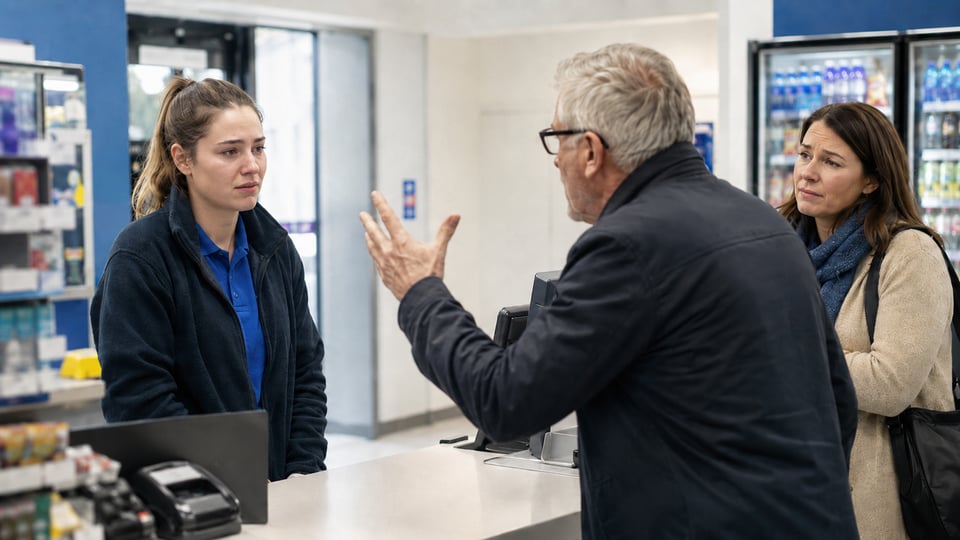
A few weeks ago, I was standing in a queue at a garage, waiting to pay. The man in front of me was trying to pay for his fuel, but the terminal would not accept his card. At first, he seemed embarrassed, then frustrated. The young colleague behind the counter suggested he try another card. It was a reasonable suggestion, but he clearly heard something different. He insisted there was nothing wrong with his card. The problem, he said, was their machine.
The conversation grew louder, then angrier, and eventually abusive. The colleague looked increasingly uncomfortable, and I intervened to suggest we calm things down. The situation was resolved, and the customer left. Then it was my turn. The colleague was visibly shaken, and I remember thinking about the next customer in the queue. They had done nothing wrong, yet they were now being served by someone who had just experienced an aggressive personal confrontation.
We talk a lot in customer experience about the effect colleagues have on customers. Perhaps we should talk more about the effect customers have on colleagues.
Something has changed
M&S recently became the first major UK grocer to publicly support the Retail Trust's Let's Respect Retail campaign. The figures are difficult to ignore. Retail Trust research found that 77% of retail workers experienced intimidating behaviour from customers last year, and almost a quarter reported being physically assaulted.
Other research tells a similar story in both Britain and Ireland. The obvious conclusion is that retailers need to be tougher on abusive customers. They do, but another, more uncomfortable question remains. How often does a broken process, a poorly communicated policy, or a badly handled conversation help turn frustration into confrontation?
That never excuses abuse, but it does mean leaders should care about what happened before the shouting began.
When frustration becomes confrontation
I encountered this frequently during my time at O2. Repairs were a classic example. From the customer's perspective, they had bought an O2 phone, paid O2 every month, and expected O2 to fix it. Behind the counter, the situation could involve manufacturers, warranties, repair agents, and rules around accidental damage. If those rules were poorly explained, customers quickly felt they were being passed around and sometimes felt blamed.
"You damaged it."
"The warranty doesn't cover that."
"You'll have to speak to the manufacturer."
Those statements might all have been technically correct, but technical correctness does not automatically lead to a good customer interaction. When customers believe nobody is taking ownership, frustration rises quickly. At the same time, frustration can escalate into abuse. The colleague needs to recognise the difference, and so does the leader.
The frontline colleague is doing more than solving a problem
When a customer becomes angry, we tend to think the colleague has one job: to resolve the issue. In reality, they are trying to understand the practical problem, manage the customer's emotional state and their own reaction at the same time. That is difficult. Someone being shouted at may feel frightened, embarrassed, angry or defensive. At exactly the moment when calm judgement matters most, it becomes harder to exercise. That is why telling colleagues simply to “stay calm” is not enough; they need practical skills.
How do I acknowledge the customer's frustration without accepting abusive behaviour?
How do I lower the temperature?
When do I stop explaining policy?
When should I involve my manager?
When does the conversation need to end?
After the customer leaves, what happens to me?
That final question matters because the next customer is already waiting.
Resilience is not pretending nothing happened
We sometimes talk about frontline resilience as if the ideal colleague simply absorbs abuse and immediately returns to smiling. I don't think that is reasonable. Resilience is not emotional suppression; sometimes a colleague needs a few minutes away from the counter, and someone needs to check in with them. Sometimes a manager should take the next customer, and serious incidents need to be recorded and followed up.
The aim should not be to create colleagues who become immune to mistreatment. It should be about creating organisations that help them recover from it. That is why the M&S initiative is important. It combines a clear message about unacceptable customer behaviour with practical support, security investment and resources for colleagues. Both elements matter.
"We expect customers to treat our people with respect."
And
"When something happens, we will support our people properly."
Leadership has to work at both ends
There is a danger, though, in treating all customer conflict as simply bad customer behaviour. Broken processes, unclear pricing, failed technology, long queues and poorly explained policies all create unnecessary friction. None justifies abuse, but leaders who want fewer confrontations should work at both ends. Protect colleagues from unacceptable behaviour and remove the operational friction that unnecessarily puts them in the firing line.
Some of the hardest calls I made as a retail leader involved deciding when to intervene. At times, the colleague had mishandled a legitimate complaint, or the customer needed a difficult decision explained more clearly. Sometimes the right response was simply:
"We will try to resolve your problem, but you cannot speak to our colleague like that."
Backing your people does not mean automatically deciding they are right. Being customer-focused does not mean automatically deciding the customer is right either. Good leadership means making the judgement.
What happened?
What part did our process play?
Could the colleague have handled it differently?
What does the customer reasonably need?
Has their behaviour crossed a line we should not accept?
These are skills organisations should train for, because rising customer abuse challenges both the customer and colleague experience. You cannot repeatedly expose people to intimidation and expect it to have no effect on the service they provide. But we can't solve the problem simply by asking customers to be nicer. We need better processes, de-escalation skills, leadership judgement, and the confidence to support colleagues when the line has genuinely been crossed.
Sometimes creating a great customer experience means saying yes, and sometimes it means finding a better solution. At times, it means saying:
We want to help you, but you cannot treat our people like that.
Continue the conversation
This article looks at how organisations can protect frontline colleagues from abusive behaviour while still creating great customer experiences. In the fuller Substack version, I explore the issue in more depth through personal examples from retail, O2 and B&Q, and look at the judgement leaders need when frustration turns into confrontation.
Read the full Substack article →Part of the RetailCX Blueprint, a growing collection of practical ideas, frameworks and real-world examples to help organisations deliver better customer and colleague experiences.
At RetailCX, we specialise in helping organisations harness the power of leadership and employee engagement to enhance customer experiences. Contact us to learn how we can support your journey toward a more innovative and customer-centric future.