

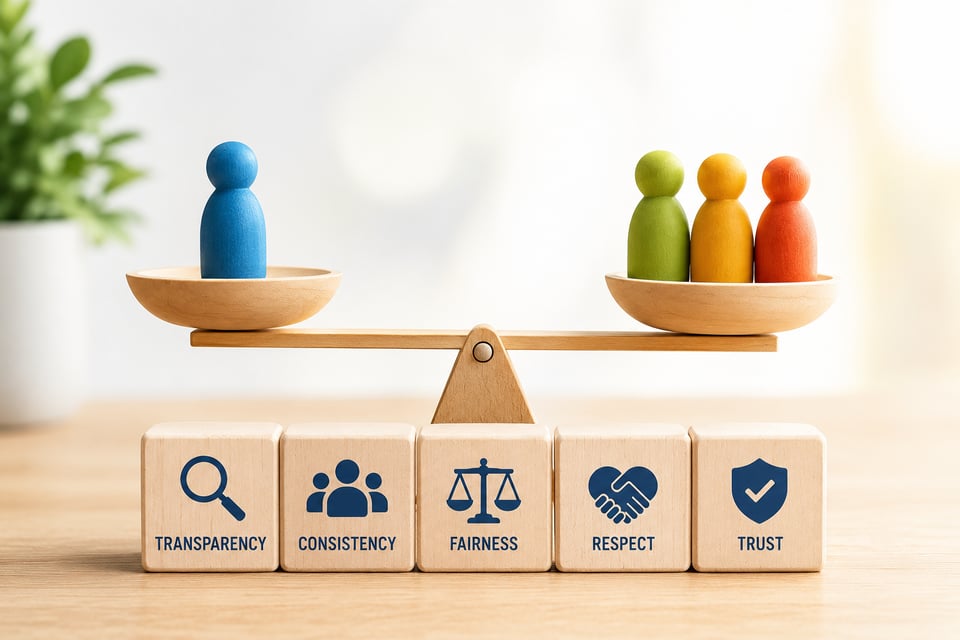
 At first glance, the controversy surrounding FIFA, Ticketmaster and major sporting events appears to be about price: High ticket prices, dynamic pricing, resale markets and premium access. But look a little deeper and a different theme emerges - fairness.
Customers will often accept higher prices when they understand the rules. They will tolerate scarcity when everybody is treated equally. They will even accept disappointment when the process feels transparent. What they struggle to accept is the feeling that the game is rigged against them.
That lesson extends far beyond football. It applies to every retailer, bank, insurer, utility and hospitality business.
The real problem isn't price
The recent scrutiny of ticketing practices highlights a common misconception. Businesses often assume customers are unhappy because something costs too much. Sometimes that's true, but more often, customers are unhappy because they feel someone else received a better deal.
Behavioural research consistently shows that people are highly sensitive to fairness. We notice queue jumpers, we dislike hidden fees, and we become frustrated when similar customers are treated differently. The emotional reaction is rarely "That cost me money", it's more often "That wasn't fair".
The issue is not always price; the issue is trust.
What O² taught me about fairness
I learned this lesson during my time at O2 Ireland. Like most mobile operators at the time, we offered attractive deals to attract new customers. New customers could often access better handset offers or airtime packages than existing customers whose contracts were ending. Commercially, the strategy made perfect sense. Customer acquisition was expensive and highly competitive.
But our customers saw something different. Many long-standing customers would ask a simple question: "Why is someone who joined yesterday getting a better deal than me after two years of loyalty?" They weren't complaining about the price. They were questioning the fairness.
Many customers switched providers, not because they wanted to leave, but because they wanted access to the deal that appeared unavailable to them. Looking back, I am not sure we fully appreciated the distinction. Internally, we were managing acquisition costs. Externally, customers felt we were rewarding strangers and penalising loyalty. The commercial decision made sense inside the business. The fairness test was being applied outside it.
The same dynamic still exists today in sectors ranging from insurance to broadband and energy. Businesses often describe it as customer churn. Customers often experience it as unfairness.
The loyalty card dilemma
You can see the same principle in grocery retail. Many supermarkets now display two prices, one for loyalty card holders and another for everyone else. Retailers argue, correctly, that customers are free to join the programme. Most do, and in fact, many shoppers now carry multiple loyalty cards.
But this reveals something interesting. Customers are often joining these programmes not because they feel loyal, but because they fear being disadvantaged. When customers feel they must join simply to avoid paying more than everybody else, the experience starts to feel less like a reward and more like a penalty.
Again, the issue isn't necessarily the price difference; it's the perception of fairness.
The hidden cost of unfairness
This matters because unfairness rarely appears on a management report. Customers don't normally complete a survey saying, "I'm leaving because your processes feel unfair." Instead, they shop elsewhere, renew with a competitor, buy less frequently and recommend you less often
Trust quietly leaks away, and eventually it shows up in declining sales, increased churn and weaker customer advocacy. By then, the damage has already been done.
What great organisations do differently
The organisations that consistently create loyalty understand three simple principles.
1. Transparency beats optimisation
Customers are far more accepting of outcomes when they understand how decisions are made.
2. Consistency builds trust
Customers expect similar situations to be treated similarly.
3. Recovery matters
When things go wrong, customers judge organisations on how fairly they are treated during recovery.
This is where empowered colleagues often become more important than technology. A great colleague can restore fairness in minutes, and a poorly designed process can destroy it just as quickly.
The leadership question
Most organisations measure customer satisfaction, complaints and loyalty. Far fewer measure perceived fairness, and yet fairness sits underneath all three. The next time customers complain about pricing, loyalty schemes, policies or service failures, ask a different question: Are they really complaining about the outcome, or are they questioning whether the process felt fair?
Because customers do not expect perfection, they do not always expect the lowest price, and they do not even expect to win. What they do expect is a fair chance, a transparent process and confidence that the rules apply equally to everyone.
Customers will forgive mistakes and delays, and even forgive the occasional bad experience. What they rarely forgive is the feeling that the game was rigged against them from the start. Once that trust is lost, winning it back becomes far more expensive than treating customers fairly in the first place.
Continue the Conversation
This RetailCX article explores why perceived fairness has such a powerful impact on customer trust and loyalty.
In the extended Substack version, I examine the psychology behind fairness, drawing connections between FIFA, Ticketmaster, loyalty card pricing, customer churn, and the hidden reasons customers choose to stay or leave.
Customers don't always leave because of price. Often, they leave because something no longer feels fair.
Read the extended Substack article: Customers Don't Mind Paying. They Mind Feeling Played. →
Subscribe to RetailCX on Substack for regular insights on customer experience, leadership, human behaviour, AI and the commercial realities shaping retail and service businesses.
At RetailCX, we specialise in helping organisations harness the power of leadership and employee engagement to enhance customer experiences. Contact us to learn how we can support your journey toward a more innovative and customer-centric future.